Asian Impact Management Review is an affiliate of Asian Institute for Impact Measurement and Management
Magazine
Issue
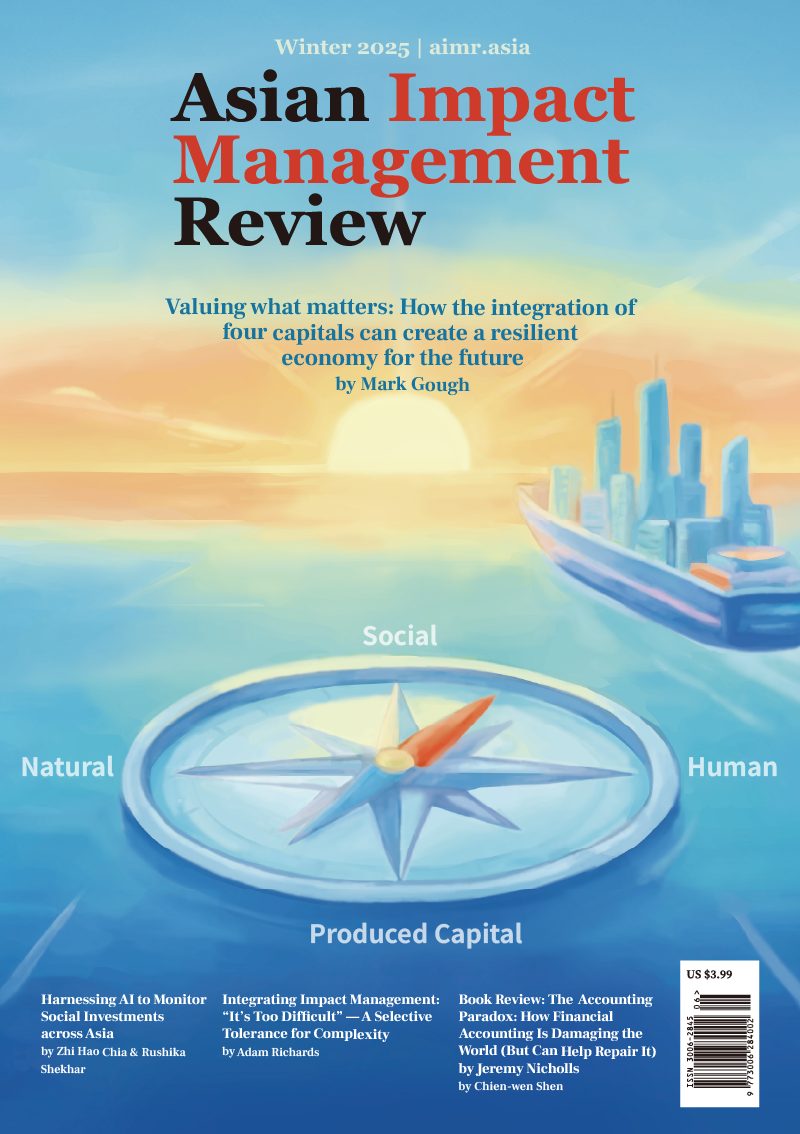
Winter 2025
Current Issue
The Winter 2025 issue explores how organizations can move beyond commitments to create measurable and lasting impact. The cover story examines the evolving concept of capital, arguing for a broader understanding of value that recognizes social, environmental, and human dimensions alongside financial returns. The regional report presents new evidence from Hong Kong, identifying critical gaps in impact measurement practices while offering practical pathways for strengthening organizational capacity. An organizational report showcases how artificial intelligence is transforming the monitoring of social investments across Asia through real-time data and collaborative insights. Two case studies demonstrate impact management in practice: one illustrates how Social Return on Investment (SROI) can empower young entrepreneurs and strengthen community-based tourism in Thailand, while the other highlights how low-cost, evidence-based interventions can expand women’s leadership in Sri Lanka’s tea industry. Methodology features examine the organizational transformation needed to integrate impact management into decision-making and introduce the GDEIB framework as a practical approach to embedding diversity, equity, inclusion, and impact into organizational systems. A thought-provoking book review challenges conventional financial accounting by advocating for integrated value creation, while our public policy argues that balancing adaptation and mitigation is essential for building long-term resilience and sustainability. Together, this issue provides practical insights and innovative perspectives for leaders seeking to embed impact into strategy, governance, and decision-making across Asia and beyond.
Editor's Words

Editor's Words
Across Asia, organizations are navigating an era of profound transformation. Climate change, technological disruption, demographic shifts, and evolving stakeholder expectations are reshaping both how success is defined and how long-term value is created.
Addressing these interconnected challenges requires organizations to move beyond measuring outcomes and toward managing impact. Impact management is emerging as a critical capability rather than a niche practice. Organizations are expected not only to demonstrate what they have achieved, but also to understand why outcomes occur, adapt to changing circumstances, and continuously improve how they create value. In this issue of the Asian Impact Management Review, we explore this evolution through diverse perspectives that demonstrate how organizations are translating evidence into action.
Together, the featured articles examine how organizations are rethinking the concept of capital, leveraging artificial intelligence, strengthening inclusive leadership, applying practical impact management frameworks, and adopting more adaptive sustainability strategies to strengthen climate resilience.
Throughout this issue, readers will encounter diverse examples of how organizations are translating evidence into action. From Hong Kong's evolving impact measurement ecosystem and the growing application of artificial intelligence in monitoring social investments to case studies from Thailand and Sri Lanka, the featured articles demonstrate that meaningful transformation is driven not only by better measurement but also by stronger decision-making, collaboration, and organizational learning. They also demonstrate that creating lasting social value does not always require significant financial investment. Rather, it depends on thoughtful systems, evidence-informed decision-making, and a commitment to continuous learning.
Building organizational capability is equally essential for sustaining long-term impact. Our methodology articles demonstrate that impact is created not only through robust measurement frameworks but also through practical implementation, organizational learning, and inclusive leadership. By introducing the GDEIB framework and exploring the realities of embedding impact thinking into everyday operations, they highlight how organizations can strengthen both performance and equity. Beyond the organizational level, our public policy article argues that climate resilience depends on balancing mitigation with adaptation, while our book review encourages readers to reconsider whether conventional accounting systems fully capture the value organizations create for society and the environment.
Although the topics in this issue span investment, organizational management, public policy, methodology, and accounting, they share a common purpose: enabling better decisions. Impact management is not simply about producing more data or adopting additional frameworks. It is about using evidence to allocate resources wisely, strengthen accountability, foster innovation, and generate sustainable value for society as a whole.
As impact management continues to mature across Asia, we hope this issue encourages readers not only to measure impact more rigorously but also to use evidence to shape better decisions, stronger organizations, and more resilient societies. By integrating impact into strategy, embracing innovation, and working across sectors, organizations can move beyond reporting outcomes toward creating meaningful and lasting change.

Cover Story

Cover Story
Valuing what matters: How the integration of four capitals can create a resilient economy for the future
This article argues for an update of our global economic system integrating natural, social, human, and produced capital into decision-making. It emphasizes moving beyond voluntary adoption to mandated regulations for a more resilient and sustainable economy.

Regional Report
Regional Report
Hong Kong’s social impact measurement gap: Key findings and pathways forward
Purpose Impact Action (PIA) 2025 survey of 93 Hong Kong nonprofits and social enterprises reveals only 31% measure impact. Key challenges include funding constraints, skills gaps, and misaligned frameworks, with only 12% leveraging data for public storytelling. This article distills findings from PIA’s landmark study, offering practical recommendations to transform measurement from a compliance burden into a strategic tool for trust, funding, and long-term impact.

Organizational Report
Organizational Report
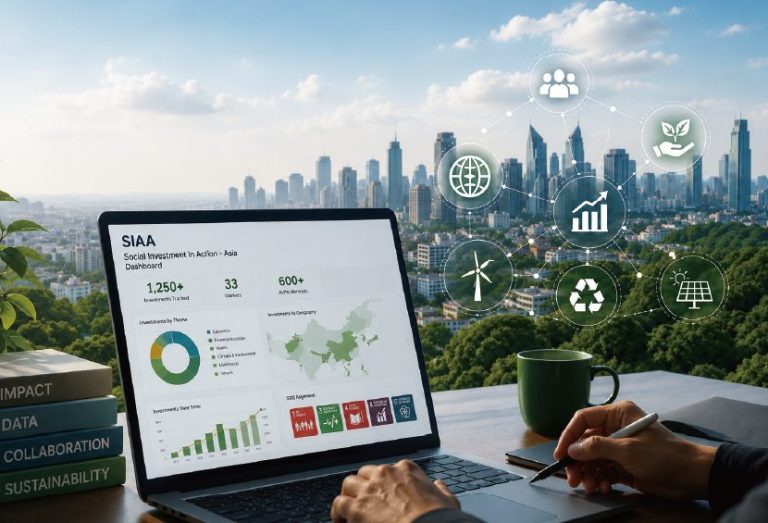
Harnessing AI to monitor social investments across Asia
AVPN leverages AI and data analytics to enhance how impact activities are tracked across Asia, equipping social investors with monitoring tools to identify collaboration opportunities and allocate capital with greater effectiveness in diverse contexts.

Case Study

Case Study
Beyond profits: Applying SROI to inspire young entrepreneurs toward community-based tourism in Thailand
Thailand has promoted community-based tourism (CBT) for over twenty years, connecting it with BCG and sustainable tourism policies. However, tourism reports still focus mainly on visitor numbers and income, ignoring important community results like job quality, opportunities for young people, cultural preservation, and environmental health, while also overlooking prevented risks. At the same time, funders and investors now demand proof of social and environmental benefits beyond financial numbers, creating challenges for new entrepreneurs. This article offers a practical SROI framework for start-ups, including outcome lists, value estimates, and simple governance measures, helping CBT businesses build strong impact cases to attract funding, guide planning, and improve long-term strength.
Case Study
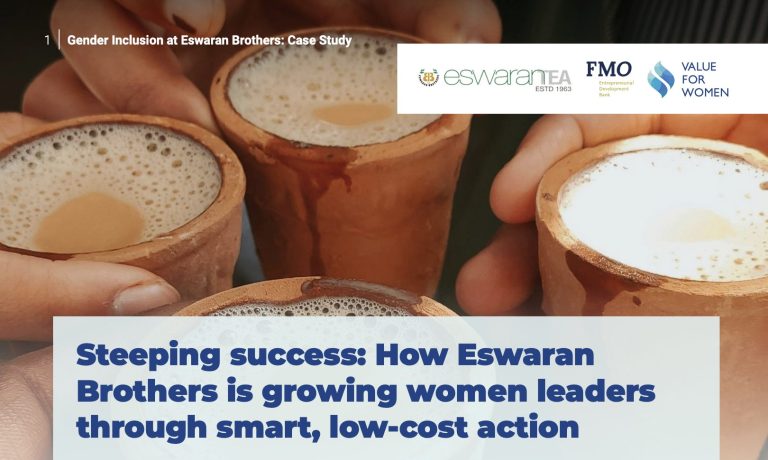
Strengthening women’s leadership through low-cost systems change: Evidence from a Sri Lankan tea manufacturer
Drawing on a Sri Lankan manufacturing case, this article shows how data-driven, low-cost actions enabled rapid gains in women’s leadership, with lessons for Asian companies and investors.

Frameworks & Practices

Frameworks & Practices
Integrating impact management: “It’s Too Difficult” – A selective tolerance for complexity
Integrating impact management into governance and decision-making is crucial for organizations to contribute positively to sustainable development. Guidance from international best-practice management system standards outline how to effectively optimize sustainable value.
Frameworks & Practices
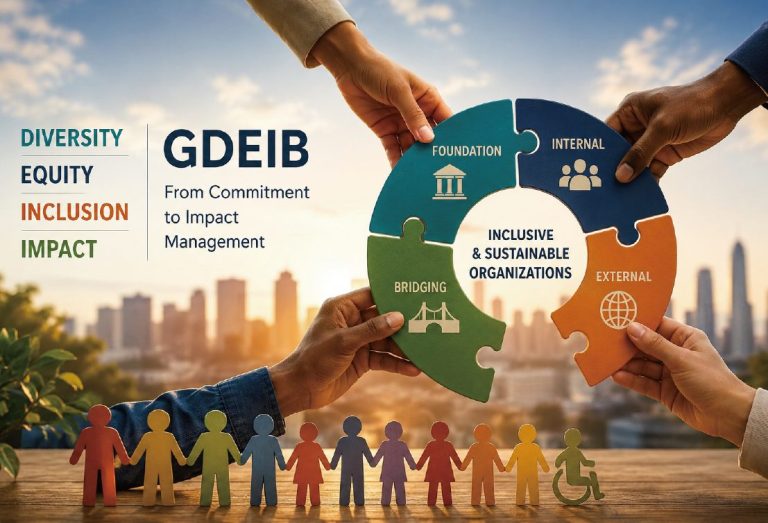
From DEI Commitment to Impact Management: Introducing the GDEIB Framework
This article introduces GDEIB as a global framework for managing diversity, equity, and inclusion, showing how organizations can move from commitment to measurable impact and systemic change.

Book Review
Book Review
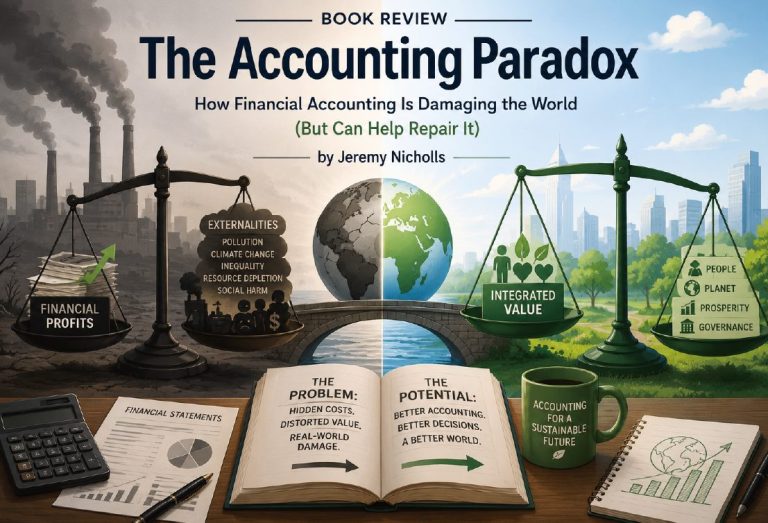
Book Review: The Accounting Paradox: How Financial Accounting Is Damaging the World (But Can Help Repair It) by Jeremy Nicholls
This review examines The Accounting Paradox, highlighting how financial accounting can both obscure social and environmental costs and become a powerful tool for impact, accountability, and systemic change.

Public Policy

Public Policy
The adaptation advantage: Optimizing the sustainability equation for resilience and impact
This article advocates for “optimum effort” in sustainability, urging Indonesian leaders to innovate where adaptation and mitigation reinforce each other, transforming climate vulnerability into economic resilience, operational efficiency, and impact.

