Asian Impact Management Review is an affiliate of Asian Institute for Impact Measurement and Management
Tag
Impact Management
Magazine
Frameworks & Practices
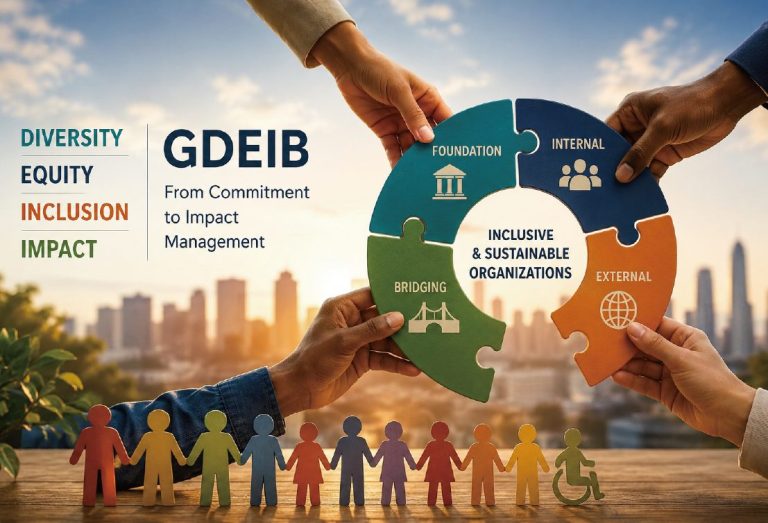
From DEI Commitment to Impact Management: Introducing the GDEIB Framework
This article introduces GDEIB as a global framework for managing diversity, equity, and inclusion, showing how organizations can move from commitment to measurable impact and systemic change.
Magazine
Book Review
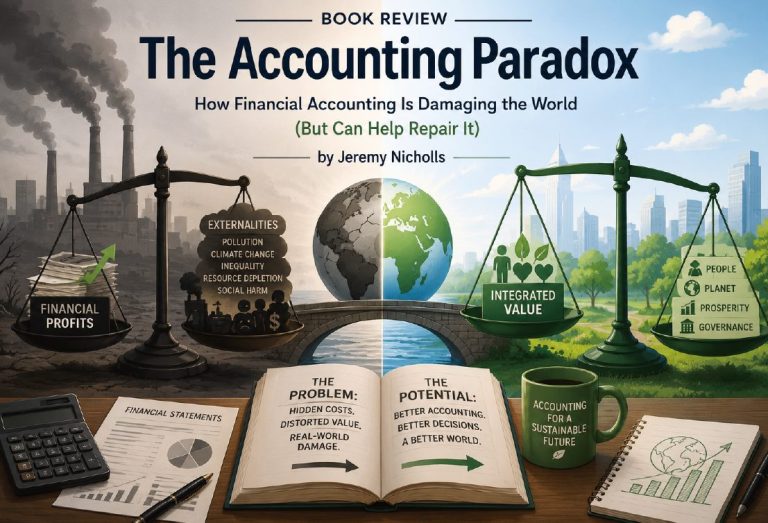
Book Review: The Accounting Paradox: How Financial Accounting Is Damaging the World (But Can Help Repair It) by Jeremy Nicholls
This review examines The Accounting Paradox, highlighting how financial accounting can both obscure social and environmental costs and become a powerful tool for impact, accountability, and systemic change.
Magazine


Frameworks & Practices
Integrating impact management: “It’s Too Difficult” – A selective tolerance for complexity
Integrating impact management into governance and decision-making is crucial for organizations to contribute positively to sustainable development. Guidance from international best-practice management system standards outline how to effectively optimize sustainable value.
Topics

Governance
Artificial Intelligence Technology: A Missing Catalyst in Impact Measurement and Management – opinion article
This opinion article illuminates how artificial intelligence technology can play a significant role in employing Impact Measurement and Management (IMM) in different organizations around the world.
Magazine

Research Highlights
Beyond ESG: Embracing Impact Measurement for Real Sustainable Finance
The Value Model and Impact Measurement and Management overcome ESG ratings’ limitations by emphasizing measurable outcomes, transparency, and stakeholder inclusivity, enabling sustainability and finance professionals align financial returns with meaningful societal and environmental impacts.
Topics

Frontier Insights
Can a Business Consultancy Drive Impact? Real-Time Management – RTM experience
In this interview, Larry Oruro, Project Manager and Sustainability Leader at Real Time Management (RTM), discussed how consultancies drive impact by promoting effective measurement and management practices. He emphasized that RTM helps organizations adopt impactful strategies by focusing on clear communication and cultural adaptation, such as using stakeholders’ language. Larry also highlighted that a consultancy must be rooted in sustainability values to inspire the same commitment in the organizations they advise. Successful impact relies on integrating sustainability into core business practices and continuously improving through impact measurement and certifications. This interview was conducted by Marycielo Valdez Sanchez for the Asian Impact Management Review (AIMR) to explore entrepreneurs and projects worldwide that strive to create a positive impact, share their challenges and achievements, and understand how they manage and measure their impacts.
Topics

Impact Investing
Yunusian Social Business in the Impact Investment Ecosystem
In the impact investment paradigm, social business (SB) emerges as a beacon of hope, a profit-with-purpose-driven model that includes the zero-return (non-dividend) financing approach. It capaciously yields higher social benefits by virtue of its seven operational principles. SB’s impact could be profoundly enhanced by anchoring it with grants, social investment wholesalers, corporations, and high-net-worth individuals.
Magazine

Case Study
The Value of Impact Measurement and Management: Lessons from a Youth Employment Program in South Africa
Impact assessment and measurement are vital to achieving the desired outcomes of impact-first as well as sustainable impact investment strategies, as illustrated by this case study of a South African youth employment program.
Magazine

Case Study
Operationalizing Social Value Strategy: How to Connect Operational Activities to Social Value Goals
This study examines operationalizing Social Value (SV) in an organization through a case study of ISG Ltd. We propose the “Connect Activities to Goal” (CAG) framework (Capacity Building, Action Planning, Guided Behavior) to bridge the gap between SV strategy and measurable SV goals.
Magazine

Organizational Report
The Latest Impact Investment Trends in Japan
Impact investing is gaining momentum in Japan, backed by governmental initiatives and private sector participation. This article highlights the two critical programs driving this growth and their implications.

